

Our solutions
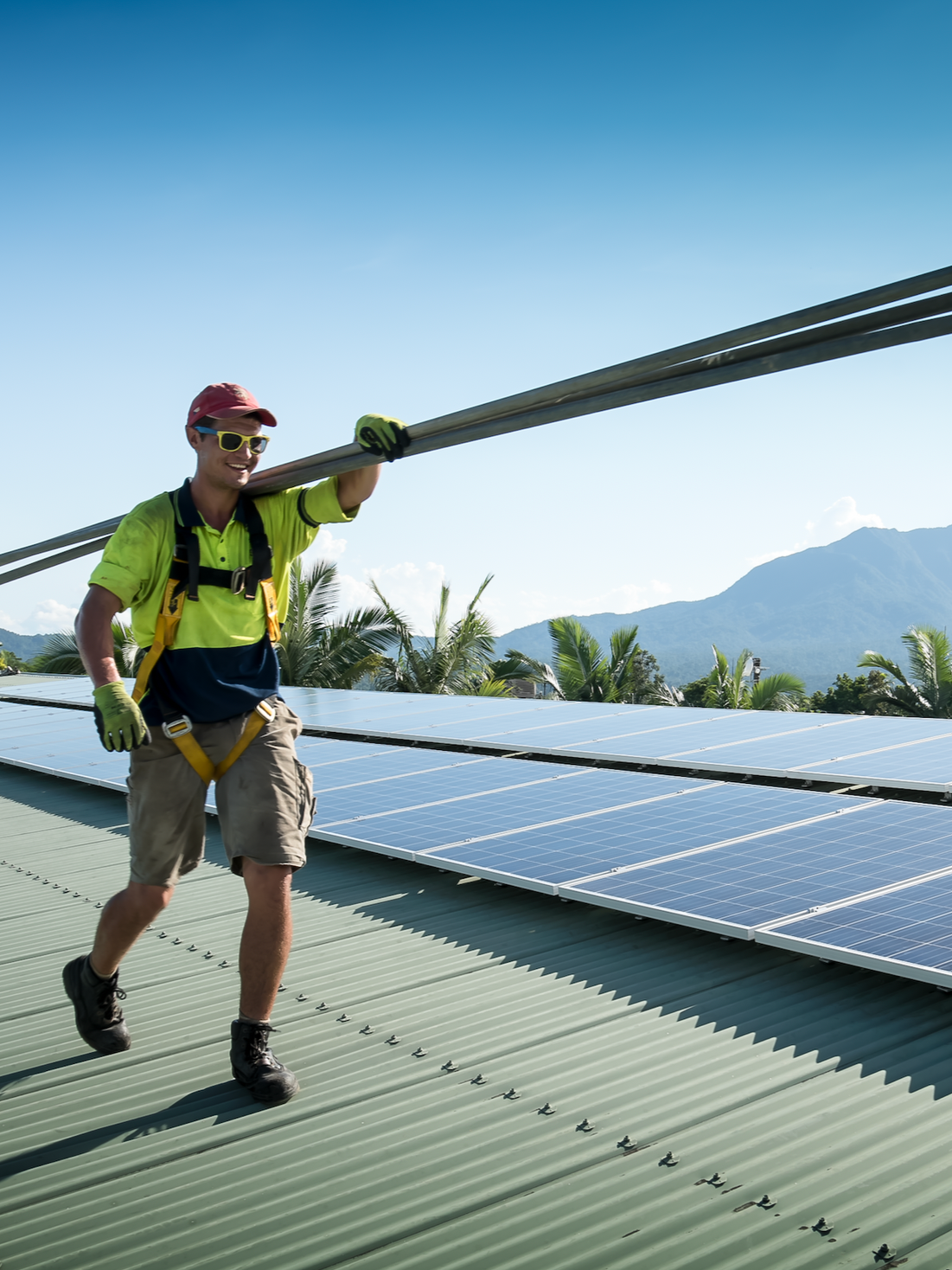
Storm Safe Roof Mount
Storm Safe Roof Mount is a cyclone-rated photovoltaic racking system engineered for the commercial and industrial market (C&I), and “Important Buildings”.
Built for environments where failure carries disproportionate cost, the system enables solar deployment on roofs that are typically excluded due to wind classification, structural limits, or risk profile.
Rather than relying on site-specific improvisation, Storm Safe Roof Mount is engineered to be out-of-the-box compliant in nearly all scenarios, delivering predictable and repeatable outcomes that asset owners can rely on. This removes unnecessary engineering and design complexity, and near-eliminates on-roof decision-making by tradies - saving upfront costs and downstream maintenance or rework costs.
We’ve deployed in over 100 projects in cyclone regions, and have experienced five cyclones with zero failures.
Its geometry is optimised to manage uplift, lateral, and downward forces across long spans, reducing fixings, penetrations, and points of failure.
Designed for extreme conditions where buildings must keep operating:
“Out-of-the-box” compliant with 1:2000 year wind events in wind regions A, B & C.
“Out-of-the-box” compliant with 1:500 year wind events in wind region D. Spacing adjustments need to be made to the “out-of-the-box” design to reach higher tolerances on a site specific basis.
Designed for buildings of Importance Level 3 (IL3) & Importance Level 4 (IL4).
50-year design life, supporting multiple generations of panel replacement without structural rework.
Installation advantages:
Faster installation with fewer components.
Reduced roof penetrations and simplified fixing methodology.
Up to half the installed cost of the market incumbent racking designs.
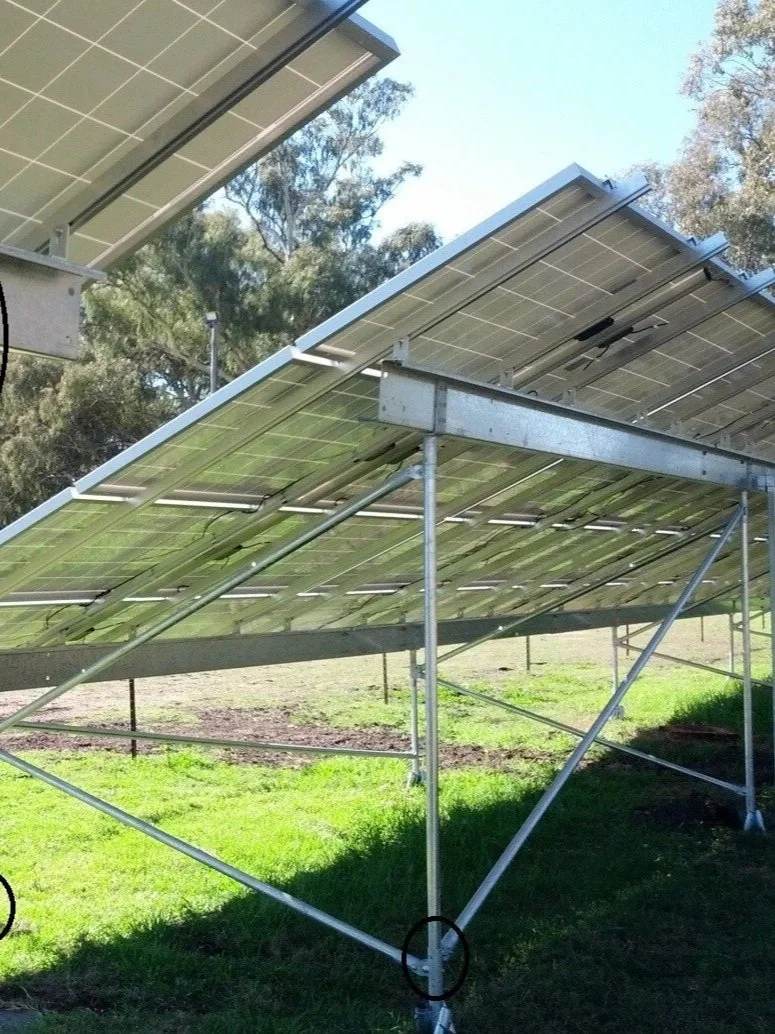
Storm Safe Ground Mount
Storm Safe Ground Mount is a fixed-tilt, cyclone-rated system engineered for agribusiness and small utility-scale solar in high-wind, remote, and constrained environments.
Designed to install without concrete, heavy machinery, or extensive site preparation, it is well suited to mine sites, ports, energy infrastructure, and temporary or relocatable facilities where access is limited and ground disturbance must be minimised.
Its optimised geometry manages downward, lateral, and uplift forces to reduce structural risk, simplify installation, and deliver long-life, insurable solar infrastructure in environments where failure carries disproportionate cost.
Designed for extreme conditions where longevity matters:
Rated to 1-in-200-year wind events in wind region D
No reliance on moving parts, reducing maintenance costs and failure risk e.g. trackers
No concrete
This system is ideal where site conditions restricts large vehicle access, remote locations where water is scarce, where sandy or variable-density ground is to be used to base construction or areas where environmental conditions require temporary structures to be removed with little or no footprint.
Installation advantages:
Quick and easy to install
No concrete required
No heavy lifting
No need for heavy machinery
Height adjustable
Impervious to termites and moisture
Steel & Aluminium construction
No post holes required
Minimal site preparation required
Temporary or permanent
Full load bearing immediately after installation
Light weight and easily transported
All weather, all terrain, anywhere
Structural members installed immediately (no waiting for concrete to dry)
Ground Types:
The foundational anchor is suitable for all types of ground types including:
CLASS 'A' - Little or no ground movement
CLASS 'S' - Slightly reactive sites
CLASS 'M' - Moderately reactive sites
CLASS 'H' - Highly reactive sites
CLASS 'E' - Extremely reactive sites
CLASS 'P' - Problem sites
